

Humanity, Conduct and Responsibility
The Humans of Our World Charter
Our principles, rules and responsibilities. 2026 Edition.
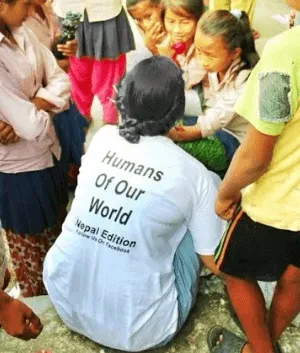
Our principles
We Rise for One Another
We believe conscience is a shared responsibility and empathy gives us the power to stand for people beyond our own borders. In a world where artificial intelligence is rising, human wisdom must rise even higher.
The Charter sets out the principles that guide our humanitarian mission, conduct and relationships with communities. These responsibilities complement the foundation’s governing documents and applicable law.
We Rise for One Another. MAKE HUMANITY VIRAL.
- No photograph is more important than a person.
- No recognition is more important than a life.
- No campaign is more important than the dignity and safety of those affected.
The Charter
The 17 articles
Article 1 Equal human dignity
Respect every person regardless of nationality, ethnicity, race, disability, religion, belief, gender, sex, sexual orientation, age, economic circumstances, immigration status or other protected or personal characteristics. Avoid humiliation, stereotypes, discriminatory language and exploitation of hardship. Humanitarian decisions must reflect need, safety and the legitimate scope of the programme.
Article 2 No conditions on humanitarian help
No representative may demand conversion to a faith, endorsement of a political view, publicity, sexual contact, gifts, labour, loyalty or any other unrelated personal benefit in exchange for essential assistance. Never use a vulnerable person’s need to recruit, coerce or punish them. Do not promise services that HOW cannot deliver.
Article 3 Humility and community leadership
We do not arrive as saviours. Listen to communities, respect local expertise, and collaborate with credible grassroots organisations. Respect the agency and decisions of those receiving assistance. Where another qualified organisation is better positioned to respond, coordinate or refer rather than compete for attention.
Article 4 Protect children and adults at risk
The safety and best interests of children and adults at risk take priority over filming, fundraising, publicity or institutional reputation. Follow role-appropriate safeguarding checks, training, risk assessments and reporting procedures. Do not arrange unsupervised private or hotel-room meetings with children.
Contacts involving adults at risk should use safe, accountable arrangements suited to the circumstances; necessary confidential clinical or professional services must be governed by qualified providers and applicable law. Allegations must be escalated promptly to the designated safeguarding lead and competent authorities where required.
Article 5 Boundaries, harassment and abuse
Do not bully, sexually harass, assault, threaten, exploit or retaliate against anyone. Respect personal and professional boundaries and consent. No person may use their title, charitable role, access to aid or access to public figures to solicit inappropriate relationships or advantages. Report concerns promptly through a confidential, safe process.
Article 6 Responsible photography and storytelling
Saving lives and meeting urgent needs come before documenting the work. Obtain appropriate informed permission before interviews, photography or publication, and pay special attention to children, medical information, trauma and security risks.
Never stage suffering, imply assistance depends on being photographed, publish identifying details that increase danger, or use someone’s story beyond agreed permissions. Maintain truthful credits, context and original publication dates.
Article 7 Truthful communication and measurable claims
Do not exaggerate reach, beneficiaries, donations, outcomes, celebrity endorsements, partners or operational capabilities. Separate direct HOW delivery, support provided through grassroots partners, advocacy and journalistic publication. Publish dates and sources for material claims. Correct errors, maintain evidence records and distinguish proposed initiatives from active services.
Article 8 Honest fundraising and financial stewardship
Explain who receives donations, their stated purpose, any restrictions, processing charges and any approved administration arrangements. Keep appropriate records, approvals and separation of restricted and unrestricted funds. Never divert a designated gift to another cause without the donor’s valid authorisation and any required legal approvals. Follow applicable financial controls, anti-fraud and anti-money-laundering obligations.
Article 9 Conflicts of interest and independence
Disclose financial, family, business and other relationships that might affect judgment. Recuse decision-makers where necessary and document conflicts decisions. Humanitarian aid must not depend on political or religious agreement. HOW may undertake lawful issue-based advocacy while keeping charitable resources, programme decisions and claims consistent with its legal obligations.
Article 10 Coordinated, safe fieldwork
Enter disaster and conflict settings only with a defined purpose, risk assessment, appropriate host, permissions, security plan and relevant competence. Respect local authorities and professional responders. Do not self-deploy, administer unqualified medical care, obstruct rescue work or promise emergency services that are not available. Support long-term local capacity where possible.
Article 11 Confidentiality, privacy and digital safety
Collect only information reasonably needed for an agreed purpose. Protect beneficiary, donor, staff and child data from unauthorised access. Use approved accounts, secure storage and access restrictions. Share sensitive information only when authorised or required for safety and lawful reporting. Promptly report suspected data breaches and digital-security incidents.
Article 12 Education, opportunity and empowerment
Where the programme permits, favour approaches that expand people’s choices, skills, access and sustainable opportunities. Avoid treating recipients as passive subjects. Work with qualified educators and local partners, and evaluate outcomes honestly rather than assuming every intervention succeeds.
Article 13 Media for good and technology for good
Journalism, cinema, communications and technology should inform, empower and protect. Preserve editorial independence and disclose relevant relationships. Assess digital tools for safety, inclusion, privacy and bias. Never present untested technology as a guaranteed medical, legal, humanitarian or emergency service.
Article 14 Animals and the environment
Extend care to the welfare of animals and to environmental impacts where relevant to HOW programmes. Seek qualified expertise and follow applicable welfare, conservation and transport rules. Do not undertake animal rescue, rehoming or field interventions without a safe and competent delivery arrangement.
Article 15 Speak up; no retaliation
Everyone representing HOW has a duty to raise a credible concern about abuse, exploitation, unsafe practice, fraud, misrepresentation or breach of this charter. Reports must be received respectfully, kept appropriately confidential and triaged promptly. Retaliation against a good-faith reporter is prohibited. Immediate threats and crimes must be referred to competent authorities as required.
Article 16 Accountability and consequences
The governing body is responsible for oversight; a designated operational lead implements training, incident recording and review. A breach may result in advice, retraining, restrictions, suspension, termination of an appointment or contract, referral to authorities, or other proportionate action with fair process. The charter does not override employment rights, due process or applicable laws.
Article 17 Adoption, transparency and review
Once approved, publish the charter’s adoption date, version, governance owner, review date and a functioning confidential contact or reporting route. Review it at least annually and after serious incidents or material changes in operations. Keep separate, detailed policies for safeguarding, complaints, financial controls, data protection, conflicts of interest, partnerships, media permissions and whistleblowing.
Review
A living commitment
The Charter is a living commitment: its principles of humanity and dignity endure, while its practical responsibilities, safeguards and methods may evolve. Any update must follow the foundation’s approved governance process and be published with an effective date and version. The Charter does not amend or supersede the foundation’s legally operative governing documents.
See the Ambassador & Guardian Handbook for how it applies to the people who represent us. For a question about the Charter, write to [email protected].
Stories that matter, in your inbox
News from the film, our campaigns and the people we work with. No spam, ever.