Cause 16 of 38Cultural Heritage2011
CAN WE GO HOME NOW?
Can We Go Home Now? Antiquities Edition
The return and preservation of cultural heritage, sacred objects, historic places and iconic natural landmarks - a continuing global campaign established in 2011.
- How it began
- Can We Go Home Now? was established by Pritan Ambroase in 2011 as an ongoing multimedia, educational and humanitarian heritage campaign, working in partnership with Humans of Our World Foundation.
- When did it start
- 2011
- Where it stands
- Ongoing advocacy
Original campaign: canwegohomenow.com
Some things belong to more than history. They belong to living people, living faiths, communities and places. A sculpture taken from a monument, a deity removed from a temple, or a sacred landscape misrepresented on a map can lose the context that gives it meaning. Can We Go Home Now? asks the world to recognise that connection - and to take responsible action to preserve and restore it.
Can We Go Home Now? was established by Pritan Ambroase in 2011 as an ongoing multimedia, educational and humanitarian heritage campaign, working in partnership with Humans of Our World Foundation. Its original platform, canwegohomenow.com, gives the wider mission: preserving and advocating for the return of cultural artefacts, sacred heritage, historic places and iconic natural landmarks. The foundation’s Antiquities Edition is the home for that continuing work - not merely a campaign about one museum collection.
Our mission: heritage belongs in the lives of people
The foundation campaigns for responsible preservation, ethical repatriation, truthful provenance and meaningful participation by the communities connected to cultural heritage. We believe the history of an object is not complete without its origin, how it was acquired, what it was used for, and what it means to the people from whom it came. Art, religion, history, identity and local memory cannot always be separated.
Our work is international in ambition and grounded in cultural respect. It includes public campaigns, journalism, original media, educational engagement, scrutiny of provenance, and advocacy directed towards institutions and decision-makers. These are substantive forms of humanitarian action. We distinguish campaigning and published work from a museum transfer, legal judgment or repatriation accomplished by another organisation.
The original campaign, from 2011 onwards
- 2011 - The beginning. The Can We Go Home Now? heritage identity was established around the return and preservation of significant cultural objects, sacred places and natural landmarks.
- 2012–2015 - International cultural advocacy. The campaign developed multimedia storytelling, education and appeals for preservation, with the Parthenon Marbles becoming a prominent focus from 2012.
- From 2016 - A broader media and education programme. The original campaign platform describes recurring cinema-docu storytelling, educational content, public-awareness activity and fundraising around heritage. Each publication, film and funding outcome should be credited and dated individually where available.
- 2020 - Mount Everest and geographic heritage. Mt. Everest Cannot Be Stolen challenged misleading representations of the world’s highest mountain, including the recognition of Nepal’s heritage and geography. This is also a separate named foundation edition.
- 2023 - Antiquities Must Go Home. The foundation published the named antiquities campaign on 17 March 2023, making its position on cultural return explicit within the wider movement established in 2011.
- 2026 - Cultural restitution remains urgent. The debate over the Parthenon Sculptures continues, while cultural objects including revered Nepali statues have been formally returned through legal and diplomatic processes led by the relevant authorities.
The Parthenon Marbles: reunite the sculptures in Athens
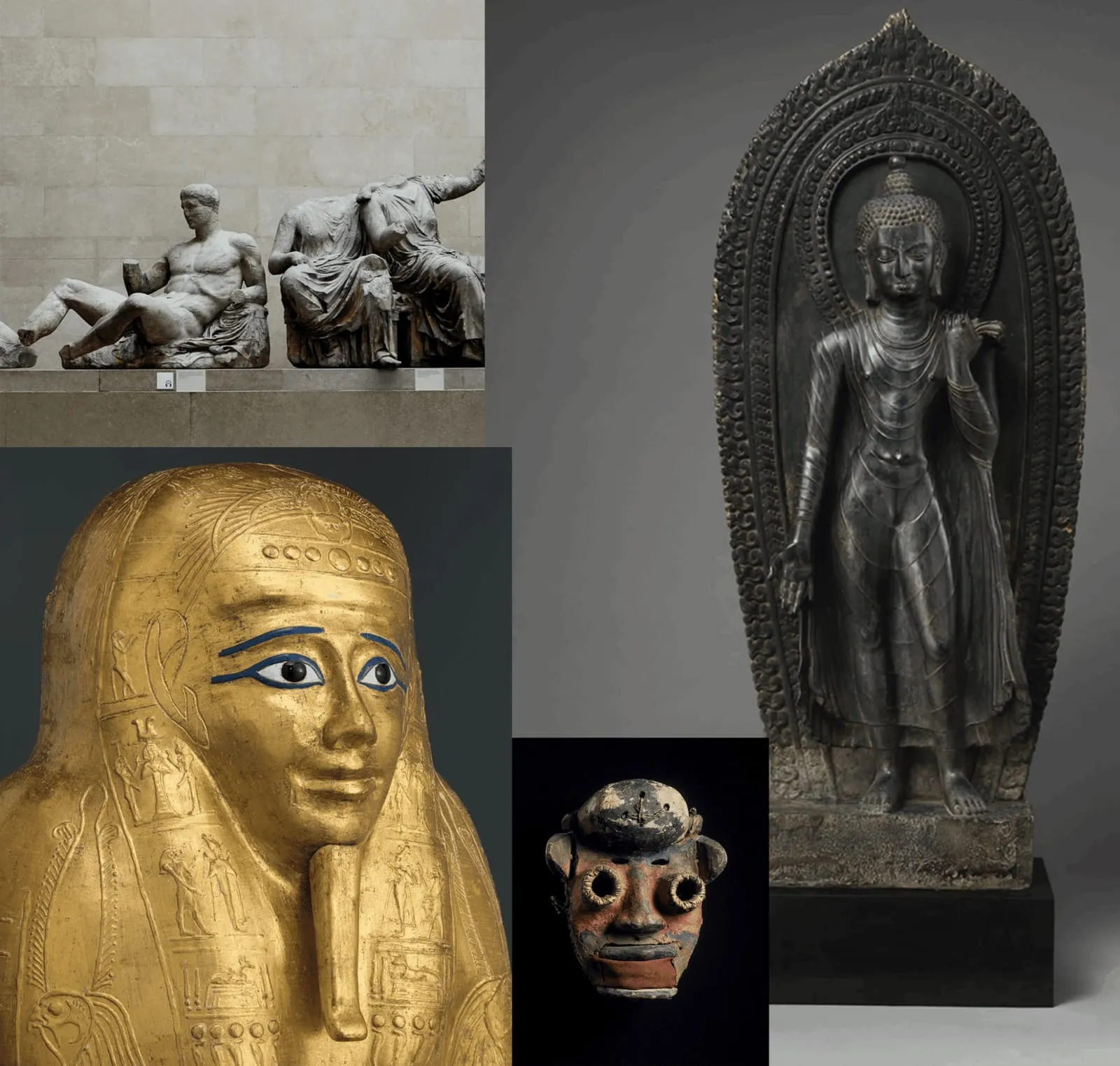
For Humans of Our World, the Parthenon Sculptures should be reunited in Athens. These works were conceived for the architecture of the Parthenon and remain part of Greece’s cultural memory. Sculptures removed in the early nineteenth century entered the British Museum’s collection and have remained at the centre of a long-running dispute about acquisition, ownership, cultural unity and return.
The Greek position emphasises reunification close to the monument and the Acropolis Museum. The British Museum and successive UK governments have advanced a different account of lawful ownership and the applicable legal constraints. The foundation’s support for reunification does not require pretending those disagreements do not exist; it requires engaging with them openly and advocating a fair resolution that takes the monument’s integrity and Greece’s continuing connection to it seriously.
Our advocacy for the Parthenon Marbles began in 2012. The discussion was still active in Parliament in November 2026. Read the November 2026 House of Lords discussion. We do not claim to have secured the sculptures’ return.
Nepal: sacred statues are part of prayer, not decoration
For many Nepali Hindu and Buddhist communities, images of deities are not simply beautiful historical artefacts. They are woven into prayer, worship, blessing, ritual, family identity and community life. A sacred image belongs to the spiritual relationships and living practices that have gathered around it, sometimes for centuries. To remove it from its temple is not equivalent to moving a decorative object between galleries.
The 2026 repatriation of a thirteenth-century Padmapani from Kathmandu’s Tham-Bahil and a sixteenth-century Nrityadevi from Patan demonstrates why cultural heritage claims deserve careful attention. Authorities in New York formally transferred these objects to Nepal in June 2026. Read the reported handover. The return was achieved through the work of the responsible authorities and partners; the foundation highlights the meaning of that restitution, not ownership of its outcome.
Antiquities Must Go Home: a continuing campaign
Under the wider Can We Go Home Now? mission, Antiquities Must Go Home calls for rigorous provenance research, action against trafficking, responsible museum practice and respectful engagement with communities of origin. The foundation has campaigned on these themes since 2011; the specifically named public article was published in March 2023. That distinction preserves the historical timeline without erasing earlier advocacy.
The campaign does not assume every object has the same acquisition history or that every return follows the same legal route. It asks institutions and collectors to confront the evidence, make records accessible, listen to affected communities and consider meaningful remedies, including restitution when appropriate. UNESCO’s 1970 Convention provides an important international framework for addressing illicit transfers of cultural property;1 it does not automatically settle every historical dispute.
Natural landmarks and cultural identity
The original campaign explicitly embraces iconic natural landmarks as well as museum objects. Mountains, sacred landscapes, archaeological places and living heritage sites can be central to identity and belonging. Their names, histories and location should not be distorted, and preservation should respect the people who live alongside them.
The foundation’s Mt. Everest Cannot Be Stolen initiative, active from 2020, links map accuracy and Nepal’s geographical and cultural recognition to this broader principle. It remains a distinct edition with its own reporting and petition history, while Can We Go Home Now? supplies the overarching cultural-heritage connection. Protection of living landscapes also connects this edition to Conservation and Sustainability and to Don’t Forget Our Villages.
Our three continuing methods of action
Journalism, cinema-docu and public advocacy
Original articles, campaign statements, filmed storytelling, interviews and cultural reporting make contested heritage visible. Publishing responsibly is an act of advocacy, not a footnote to someone else’s work. We identify the author, original date, community voice and action sought.
Education and community engagement
Public-facing educational material, heritage conversations and suitable workshops connect younger generations with cultural memory. The original campaign platform describes educational programming as a continuing strand. Specific events and completed educational outputs should be shown with their real dates and participants.
Preservation and responsible fundraising
Campaigns can mobilise attention, expertise and financial support for appropriately documented preservation and repatriation work. The original platform describes fundraising as part of its mission; any current appeal must clearly identify its recipient, restrictions and delivery arrangements, rather than imply that donations automatically fund the return of a particular object.
Provenance: ask the questions that matter
Every object should be understood through its full chain of history - not simply the name of the institution that currently possesses it. The foundation promotes five questions: Where did it originate? Who made, used or revered it? How and when did it leave? Who has a legitimate interest in its future? What response best respects both the evidence and living communities?
Provenance also connects this edition with The Hands That Make Our World, but the purposes differ: that edition emphasises artisan identity, fair recognition and authentic production; this edition asks whether a cultural object or sacred place has been separated from its rightful context and what a responsible remedy requires.
How the public can take part
- Read and share responsibly: explore the original campaign, verify the history of an object or place, and cite community voices as well as institutions.
- Support informed dialogue: ask museums, collectors and governments to disclose provenance and engage constructively with source communities.
- Contribute expertise: researchers, historians, educators, legal specialists, curators and community representatives can propose specific, evidence-led collaborations.
- Back verified projects: before donating, establish which organisation receives the funds and what preservation or educational activity is actually funded.
CAN WE GO HOME NOW? For the artefacts and places that carry memory; for the sacred objects that remain part of people’s lives; for the cultural inheritance that should not be separated from the voices to which it belongs.
Sources
- UNESCO, Basic Texts (1970 Convention on the illicit trafficking of cultural property), accessed 24 November 2026.