On making a film under air raid sirens and blackouts, and the one rule he would not break: only children speak.
Photo: Jerome Kyriacos
The director’s statement
“When reality becomes unthinkable, cinema must become precise. In that moment, cinema stops being an ambition and becomes a responsibility.”
Air-raid sirens don’t fade into background noise. They cut through your body. In Ukraine, I watched missiles arc across the sky from a hotel window, calculating whether there was time to reach shelter. This is not what I imagined when I first chose cinema at seventeen, yet it is exactly why I believe cinema matters. I never thought cinema would bring me to a place where the horizon itself felt dangerous, making a film under alarms and blackouts. And yet I realised something essential: when reality becomes unthinkable, cinema must become precise. In that moment, cinema stops being an ambition and becomes a responsibility.
Can I Go Home Now? was built on one non-negotiable decision: only Children speak. No experts. No politicians. No adults translating their reality into “analysis.” Wars are narrated by adults, planned by adults, justified by adults, negotiated by adults, while Children live inside the consequences. This film turns that order upside down. It asks the audience to listen to Children and sit with them, not as symbols or victims of tragedy, but as witnesses with agency, language and authority of their own, and to accept that their words do not require translation.
Every day, Children entrusted me with what they have endured: a young gymnast living with the loss of a limb; a teenager who watched his father die in front of him; an eleven-year-old who can no longer wear a skirt because of what she has seen, and what she fears. I also met Children who had been taken across borders and held for months: Children who described the coldest winters without blankets, isolation and punishment. Hearing these accounts did not simply move me. It altered my understanding of cruelty and responsibility. It angered me.
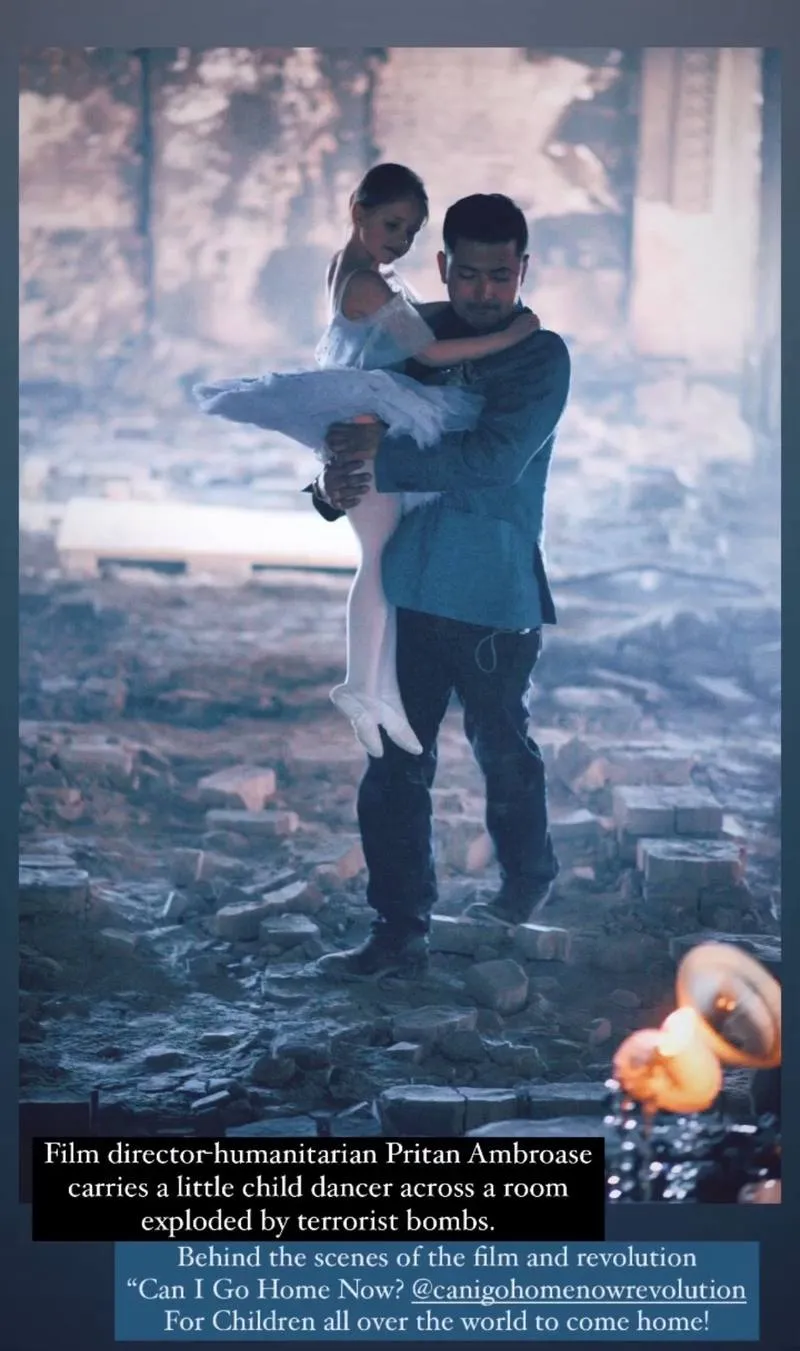
Pritan carries a Child dancer across a room destroyed by bombs.
The stories were unbearable: loss, displacement, fear, captivity, and the daily collapse of what “normal” used to mean. Many days I felt close to stopping. Then I understood that my discomfort was insignificant beside what these Children were carrying. If the world insists on debating war as strategy, this film insists on locating it where it truly lands: in a Child’s body, memory and future.
Because our contributors are Children, ethics and safeguarding governed every choice, from how participants were identified, to how consent and Child assent were confirmed, to how we shot and edited. I wanted the soundscape of war to remain truthful, not sensational; the camera never hunts for trauma; it holds space for testimony. Silence is allowed to remain silence, to speak as loudly as words. The frame is never there to extract; it is there to witness.
This is not a film about politics. It is a film about the human cost of violence on the smallest lives, and about what happens when a Child’s most ordinary question becomes impossible to answer. Parents everywhere know the phrase “Can I go home now?” It is a Child asking for warmth, safety and certainty, and almost always the answer is simple: yes. The tragedy at the centre of this film is that for these Children, the answer is still unresolved, and for millions of Children around the world, “home” is no longer a place adults can promise.
I did not make this film to shock. I am not drawn to suffering; I am driven by urgency. In the face of ongoing catastrophe, silence becomes complicity. I made it so that what has been lived by Children cannot be minimised, politicised or forgotten. My hope is that Can I Go Home Now? reaches audiences not as information, but as an encounter, an emotion that stays in your heart, and that it helps move us from passive witnessing to active responsibility. This film is my tribute to Children’s resilience, and my plea to humanity: if we cannot protect Children, then nothing we call “civilisation” is real.
Pritan Ambroase Director and producer
About the director
The “Rebel with a Cause”
Director / producer
Pritan Ambroase
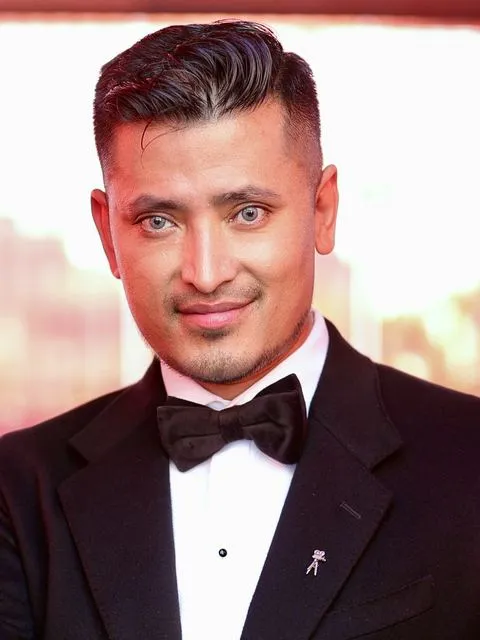
Pritan Ambroase is a film director, producer, media entrepreneur and philanthropist. Originally from Kent in England, he is known for combining entertainment, philanthropy and education to further humanitarian causes. One of the few Hollywood CEOs to have protested on foot for human rights in more than 25 countries, he has been nicknamed the “Rebel with a Cause”.
As CEO of The Hollywood Insider media network and production company, he rebuilt the brand around substance and meaningful entertainment. He is also President of The Masters of Cinema Awards. As a teenager, he started the work of the 501(c)(3) Humans of Our World Foundation, which officially began in 2006 and reports helping people and causes in more than 190 countries. By the time he finished school he had attended 11 schools in seven countries on three continents.
Photo: Andreas Rentz / The Masters of Cinema Awards
News from the film, our campaigns and the people we work with. No spam, ever.
We would like to use Google Analytics cookies to understand how people use this website, so we can improve it. They are only set if you accept. Read our cookie policy.